





Rohangupta
|
Consulting, Business awareness and ...
Star this Commitment
Day 18 of 46
Rohangupta commits to:
I will analyze and summarize one business case, economic event, or corporate strategy decision every day for 45 days and maintain a word/written summary.
10
6
|
My Commitment Journal
 Rohangupta
July 4, 2026, 5:54 PM
|
|
|
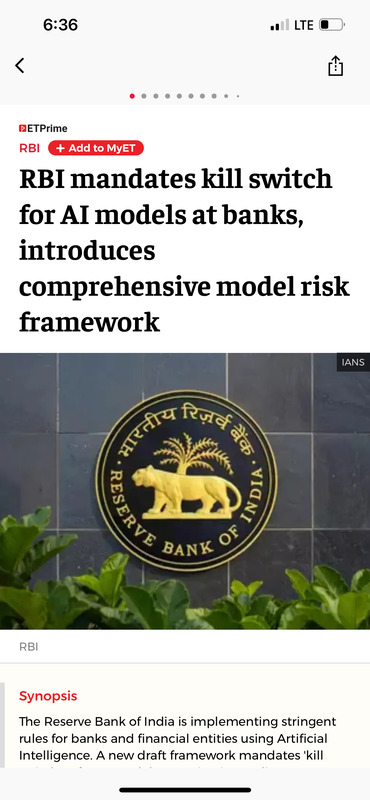
Today’s Commitment Today, I commit to conducting an in-depth analysis of three significant business developments shaping the global economy. First, I will study the continued growth of India’s startup ecosystem, examining how startup expansion is contributing to innovation, employment generation, entrepreneurship, and the country’s long-term economic development. Second, I will analyze the reported governance and regulatory developments involving OpenAI, focusing on how evolving AI regulations, corporate governance, and public policy are influencing the future of artificial intelligence businesses and technology companies. Third, I will examine the recent rise in global oil prices driven by geopolitical tensions, assessing its impact on inflation, supply chains, energy markets, transportation costs, corporate profitability, and the broader global economy. For each topic, I will go beyond simply reading the news by identifying the underlying business drivers, evaluating the strategic implications for companies and investors, understanding the broader economic consequences, and documenting my key insights, learnings, and takeaways. My objective is to strengthen my business acumen, improve my ability to connect current events with business strategy and economic principles, and develop a habit of critically analyzing major business developments every day. |
|
|
Rohangupta
July 3, 2026, 12:20 PM
|
|
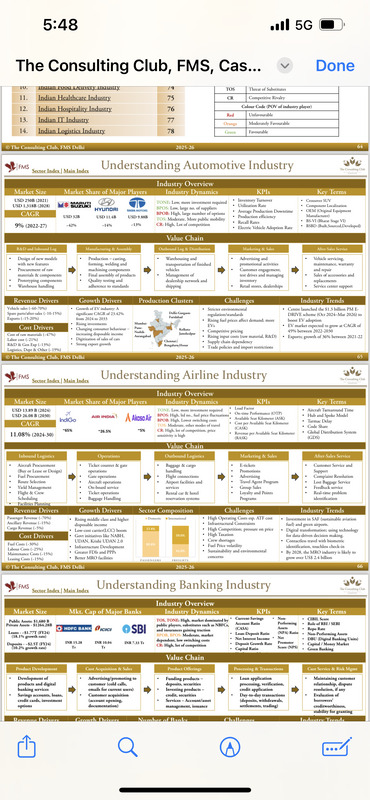
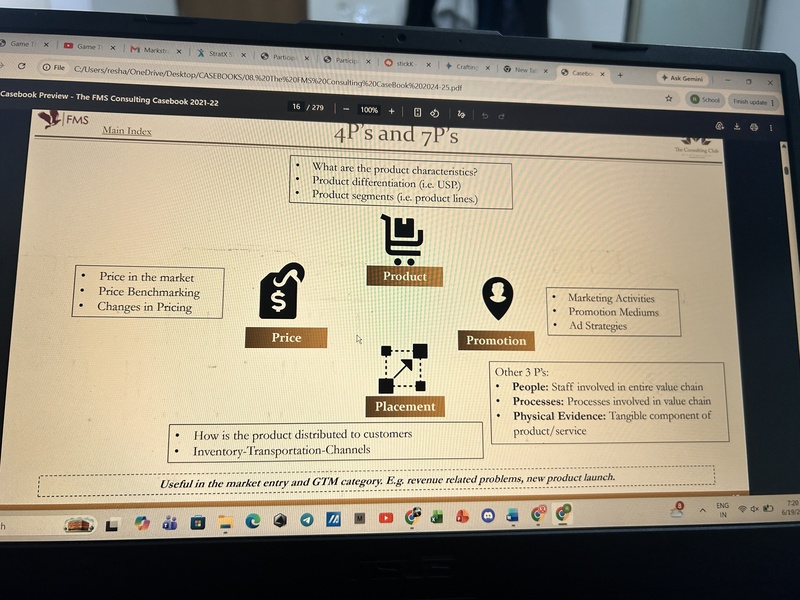
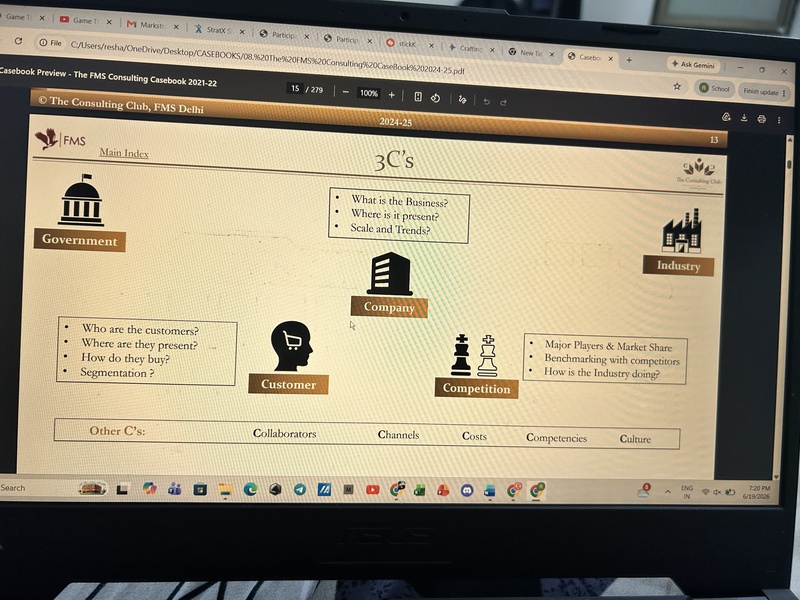
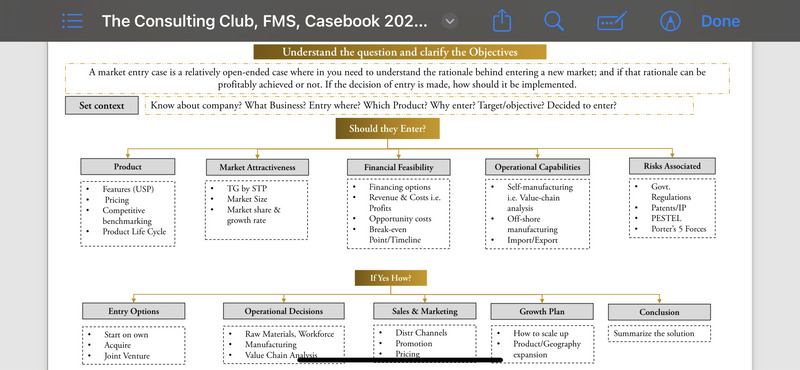
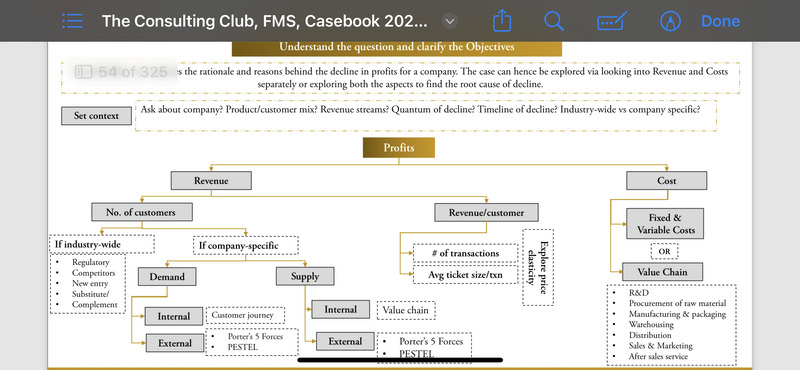
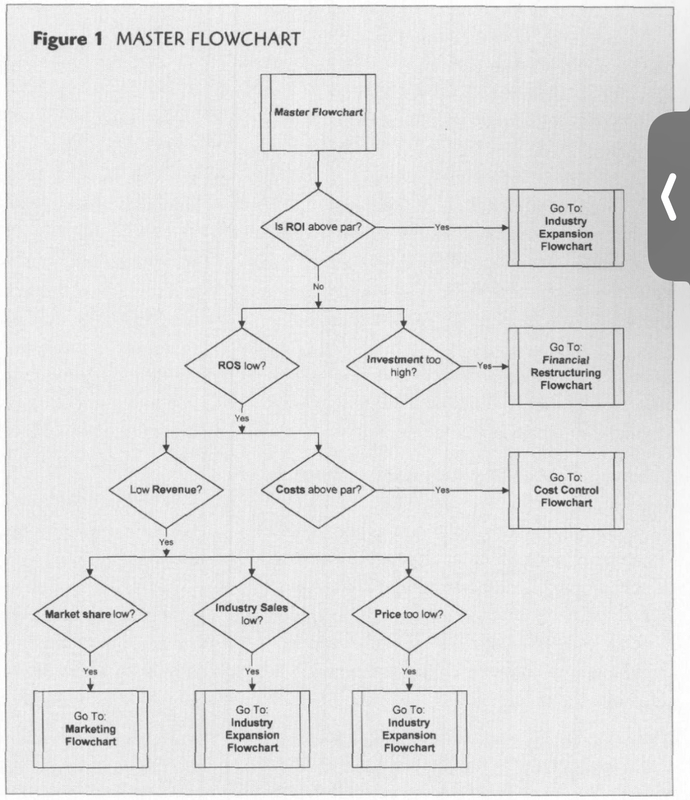
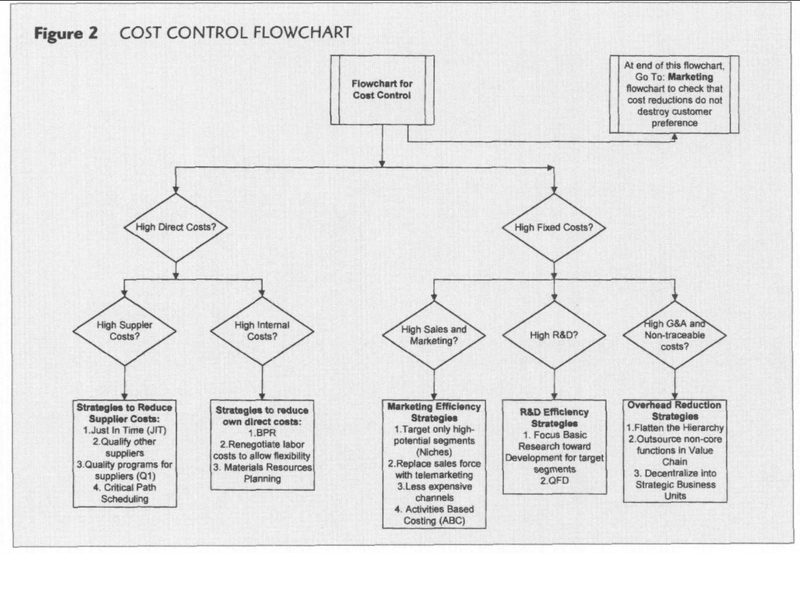
| Today, I expanded my consulting knowledge by studying advanced case-solving frameworks and developing a structured approach to business problem-solving. I learned how to use the Value Chain to identify operational inefficiencies, the Process Flow/Customer Journey framework to uncover customer pain points, the 5 Senses Framework to analyze customer experience, the VRIO Framework to evaluate sustainable competitive advantage, and the AMO Framework to assess employee performance and productivity. In addition, I completed an in-depth study of the automotive industry, covering its market size, major players, value chain, key performance indicators (KPIs), revenue and growth drivers, production clusters, industry challenges, emerging trends, and key consulting insights. This strengthened my industry knowledge and enhanced my ability to approach consulting cases with a structured, hypothesis-driven, and industry-focused mindset. | |
|
|
|
|
Rohangupta
June 30, 2026, 7:10 PM
|
|
|
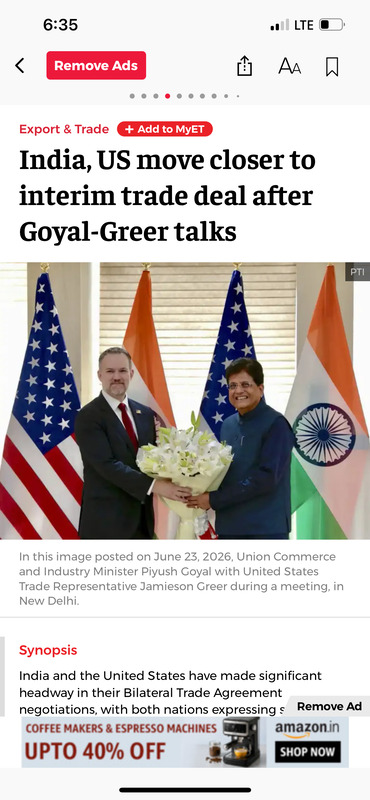
Today, I analyzed three important business developments that could significantly influence India’s economy and business environment. 1. Below-Normal Monsoon Forecast I learned that India is expected to receive below-normal rainfall in July after an unusually dry June. This could impact kharif crop production, increase food inflation, and weaken rural consumption. It reinforced my understanding of how weather patterns can directly affect agriculture, inflation, and business performance. 2. Government Lifts Fuel Sale Restrictions I studied the government’s decision to remove temporary restrictions on petrol and diesel sales from July 1. With fuel supplies stabilizing, industries such as transportation, logistics, and manufacturing are expected to benefit from smoother operations and improved supply chains. This highlighted the importance of energy policy in supporting economic activity. 3. Strong Manufacturing Growth I reviewed the latest manufacturing data, which indicates continued expansion driven by strong domestic demand and exports. Manufacturing remains a key contributor to India’s economic growth, employment generation, and investor confidence. I also learned why manufacturing indicators are closely monitored to assess the overall health of the economy. Key Takeaway: Today’s business news helped me understand how macroeconomic factors such as weather, government policy, and industrial performance collectively shape business decisions and economic growth. Staying updated with these developments will strengthen my business awareness and consulting perspective. |
|
|
Rohangupta
June 29, 2026, 12:00 PM
|
|
|
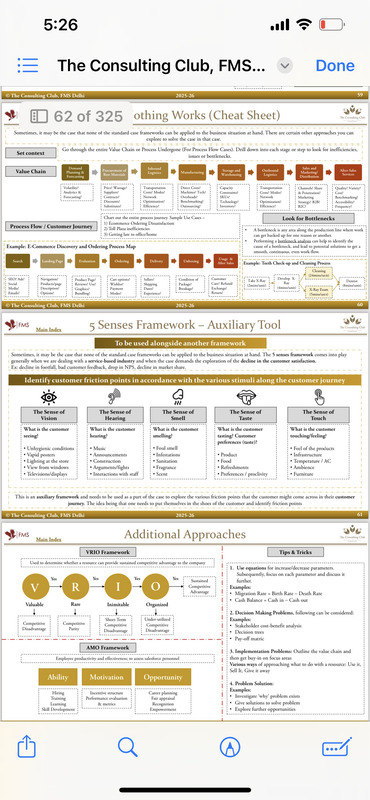
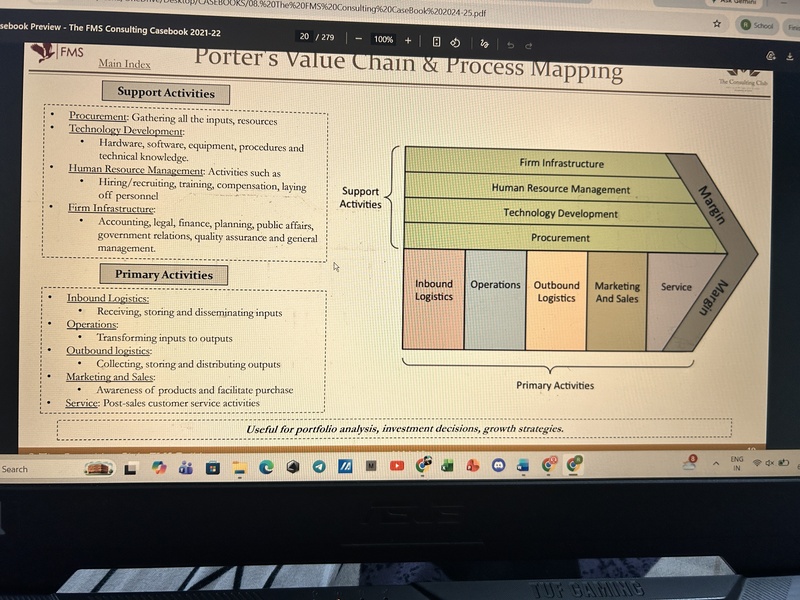
Today, I learned several consulting frameworks that help solve business problems in a structured way. * Value Chain Analysis: Learned to break down the entire business process—from demand planning and procurement to manufacturing, logistics, sales, and after-sales service—to identify inefficiencies, cost drivers, and opportunities for value creation. * Process Flow & Bottleneck Analysis: Understood how mapping the customer journey helps identify bottlenecks that reduce efficiency and customer satisfaction, enabling targeted operational improvements. * 5 Senses Framework: Explored how to evaluate customer experience through sight, sound, smell, taste, and touch to identify friction points and improve customer satisfaction. * VRIO Framework: Learned to assess whether a company’s resources create a sustainable competitive advantage by evaluating if they are Valuable, Rare, Inimitable, and Organized. * AMO Framework: Understood that employee performance depends on three factors—Ability, Motivation, and Opportunity—and how organizations can improve productivity by strengthening each. * Key Takeaway: Effective consulting combines structured frameworks with logical thinking to diagnose problems, identify root causes, and recommend practical, high-impact solutions. Learning Outcome: I strengthened my toolkit for case interviews by learning when and how to apply different frameworks based on the business problem rather than relying on a single standard approach. |
|
|
|
|
.